Showing posts with label computer security. Show all posts

Friday, January 24, 2014

New Windows malware tries to infect Android devices connected to PCs


PCWorld - A new computer Trojan program attempts to install mobile banking malware on Android devices when they’re connected to infected PCs, according to researchers from Symantec. 

This method of targeting Android devices is unusual, since mobile attackers prefer social engineering and fake apps hosted on third-party app stores to distribute Android malware. 


“We’ve seen Android malware that attempts to infect Windows systems before,” Symantec researcher Flora Liu, said Thursday in a blog post. “Android.Claco, for instance, downloads a malicious PE [portable executable] file along with an autorun.inf file and places them in the root directory of the SD card. When the compromised mobile device is connected to a computer in USB mode, and if the AutoRun feature is enabled on the computer, Windows will automatically execute the malicious PE file.” 


“Interestingly, we recently came across something that works the other way round: a Windows threat that attempts to infect Android devices,” Liu said.    Read More

Tuesday, November 19, 2013

A Heads Up: Holiday Season Phishing Scams and Malware Campaigns


As the winter holidays approach, US-CERT reminds users to stay aware of seasonal scams and cyber campaigns, which may include:
  • electronic greeting cards that may contain malware
  • requests for charitable contributions that may be phishing scams and may originate from illegitimate sources claiming to be charities
  • screensavers or other forms of media that may contain malware
  • credit card applications that may be phishing scams or identity theft attempts
  • online shopping advertisements that may be phishing scams or identity theft attempts from bogus retailers
  • shipping notifications that may be phishing scams or may contain malware
US-CERT encourages users and administrators to use caution when encountering these types of email messages and take the following preventative measures to protect themselves from phishing scams and malware campaigns:
  via US-Cert.Gov

Thursday, October 17, 2013

You’re infected—if you want to see your data again, pay us $300 in Bitcoins. Ransomware comes of age with unbreakable crypto, anonymous payments


Ars Technica - Malware that takes computers hostage until users pay a ransom is getting meaner, and thanks to the growing prevalence of Bitcoin and other digital payment systems, it's easier than ever for online crooks to capitalize on these "ransomware" schemes. If this wasn't already abundantly clear, consider the experience of Nic, an Ars reader who fixes PCs for a living and recently helped a client repair the damage inflicted by a particularly nasty title known as CryptoLocker.

It started when an end user in the client's accounting department received an e-mail purporting to come from Intuit. Yes, the attached archived zip file with an executable inside should have been a dead giveaway that this message was malicious and was in no way affiliated with Intuit. But accounting employees are used to receiving e-mails from financial companies. When the receiver clicked on it, he saw a white box flash briefly on his screen but didn't notice anything else out of the ordinary. He then locked his computer and attended several meetings.

Within a few hours, the company's IT department received word of a corrupt file stored on a network drive that was available to multiple employees, including the one who received the malicious e-mail. A quick investigation soon uncovered other corrupted files, most or all of which had been accessed by the accounting employee. By the time CryptoLocker had run its course, hundreds of gigabytes worth of company data was no longer available.   More

Thursday, October 3, 2013

How to build the ultimate PC security suite for free

PCWorld - If you have a PC, you’re a target.

Those kinds of sweeping, dramatic statements tend to set my eyes a-rollin’, as they frequently lead into a pitch to spend your hard-earned cash on a high-priced security suite.

Here’s the thing, though: As crass as the delivery is, the message itself is true. If the bad guys aren’t phishing for your personal data, they’re trying to trick you out of your credit card details or angling to turn your machine into a botnet zombie. If you’re connected to the Net, you really are a potential target.

But that doesn’t mean you need to shell out cash for a premium security suite. Though the likes of McAfee and Symantec offer simple, seamless solutions, you can cobble together a DIY security suite of your own that provides most of the protection that the boxed options do, at none of the cost. Once you’ve slapped these apps on your PC and read up on how to avoid the Web’s most devious security traps, you’ll have a decent amount of protection from the majority of the Web’s worst boogeymen.

Get a good, free antivirus program


AVG Free 2014 is designed with a Windows 8-esque aesthetic. 
(Click to enlarge.)
AVG Free topped the charts in our most recent free antivirus roundup, and this superb software suite has only gotten better since. Fast and efficient, AVG does a great job of blocking malicious downloads before they happen, and it’s even better at eradicating malware that has already slipped onto your machine.  More

Sunday, August 4, 2013

Defcon 21 - Wi-Fi Routers: More Security Risks Than Ever


The research team that discovered significant security holes in more than a dozen home Wi-Fi routers adds more devices to that list at Defcon 21.

PCWorld - LAS VEGAS -- More major brand-name Wi-Fi router vulnerabilities continue to be discovered, and continue to go unpatched, a security researcher has revealed at Defcon 21.

Jake Holcomb, a security researcher at the Baltimore, Md.-based firm Independent Security Evaluators and the lead researcher into Wi-Fi router vulnerabilities, said that problem is worse than when ISE released its original findings in April.

The latest study continues to show that the small office and home office Wi-Fi routers are "very vulnerable to attack," Holcomb said.

"They're not a means to protect your network and your digital assets," he cautioned.
Holcomb is a relatively young researcher, in his mid-20s, who turned his lifelong interest in computer security into a professional career only in the past year. Previously, he was doing network security for a school district in Ohio.   More

Monday, July 15, 2013

Unusual file-infecting malware steals FTP credentials


PCWorld - A new version of a file-infecting malware program that’s being distributed through drive-by download attacks is also capable of stealing FTP (File Transfer Protocol) credentials, according to security researchers from antivirus firm Trend Micro.

The newly discovered variant is part of the PE_EXPIRO family of file infectors that was identified in 2010, the Trend Micro researchers said Monday in a blog post. However, this version’s information theft routine is unusual for this type of malware.

The new threat is distributed by luring users to malicious websites that host Java and PDF exploits as part of an exploit toolkit. If visitors’ browser plug-ins are not up to date, the malware will be installed on their computers.

The Java exploits are for the CVE-2012-1723 and CVE-2013-1493 remote code execution vulnerabilities that were patched by Oracle in June 2012 and March 2013 respectively.   More

Wednesday, April 24, 2013

Recently patched Java flaw already targeted in mass attacks, researchers say


PCWorld - A recently patched Java remote code execution vulnerability is already being exploited by cybercriminals in mass attacks to infect computers with scareware, security researchers warn.

The vulnerability, identified as CVE-2013-2423, was one of the 42 security issues fixed in Java 7 Update 21 that was released by Oracle on April 16.

According to Oracle’s advisory at the time, the vulnerability only affects client, not server, deployments of Java. The company gave the flaw’s impact a 4.3 out of 10 rating using the Common Vulnerability Scoring System (CVSS) and added that “this vulnerability can be exploited only through untrusted Java Web Start applications and untrusted Java applets.”

However, it seems that the low CVSS score didn’t stop cybercriminals from targeting the vulnerability. An exploit for CVE-2013-2423 was integrated into a high-end Web attack toolkit known as Cool Exploit Kit and is used to install a piece of malware called Reveton, an independent malware researcher known online as Kafeine said Tuesday in a blog post.

More

Monday, February 11, 2013

The 10 weirdest, wildest, most shocking computer security exploits ever


This ain't your momma's Internet

PCWorld - Update your browser. Ditch Java. Don't click weird links from even weirder people. Ho-hum. The basic tenets of PC security are burned into the brains of most Web surfers by now. The old malware tricks just don't work as well anymore.

Surprise! Bad guys are getting creative. (Never underestimate the oh-so-powerful combination of greed, boredom, and cleverness.) Rather than targeting Internet Explorer, now they're gunning for your virtual machine, your video games, and your Web-connected thermostat.

"The more digital our lives become, the greater the number of potential nontraditional entry points for cybercriminals attempting to steal data and wreak havoc," says McAfee Labs security strategist Toralv Dirro, who referred us to some of the wild exploits highlighted here. Grab your tinfoil hat, and let's take a walk down wacky-hack lane.


The chamber of chaos

First things first: Many of the more exotic exploits in this collection have been identified by security researchers, but not found in the wild. But before you write off these dangers as tomfoolery confined to labs alone, consider the terrifying case of the U.S. Chamber of Commerce.

In 2010, the Chamber was the subject of a deep and complicated intrusion. The penetration was so thorough that once authorities discovered the problem, the Chamber found it easier to destroy some PCs completely rather than scrub them clean.

That's scary, but what happened after the problem was "eliminated" is even more frightening: One of the Chamber's thermostats was found to be communicating with Chinese servers, while one executive's printer began spitting out pages composed entirely in Chinese. And that brings us to the next wild exploit…

More

Monday, November 5, 2012

Study finds 25 percent of Android apps to be a security risk

PCWorld - According to a new report from Bit9—a security vendor with a focus on defending against advanced persistent threats (APT)—there is a one in four chance that downloading an Android app from the official Google Play market could put you at risk. Bit9 analyzed 400,000 or so apps in Google Play, and found over 100,000 it considers to be on the shady side.

Does that mean that the sky is falling, and everyone with an Android smartphone or tablet should abandon it immediately? No. The research by Bit9 illustrates some issues with app development in general, and should raise awareness among mobile users to exercise some discretion when downloading and installing apps, but it’s not a sign of any urgent crisis affecting Android apps.

The report from Bit9 isn’t about apps that contain malware, or are even overtly malicious for that matter. Bit9 reviewed the permissions requested by the apps, and examined the security and privacy implications of granting those permissions. The reality is that many apps request permission to access sensitive content they have no actual need for. 

More

Monday, October 29, 2012

Data breach victims could get damages from careless firms


PCWorld - How federal courts define the damages people suffer from data breaches is broadening dramatically, leaving unprepared companies at greater risk of big payouts in class-action lawsuits, lawyers from a prominent law firm say.

Until a couple of years ago, courts would routinely dismiss lawsuits stemming from data breaches, such as the latest in South Carolina, unless the victims could show specific damages. Judges have since widened their view and are awarding class-action status to lawsuits that can show actual damages or a real possibility of future damages.

The latter would make companies liable for steps taken to prevent financial harm, such as insurance to cover the costs associated with identity theft.

Jeffrey Vagle, a lawyer with Pepper Hamilton, described as a "sea change" in judges' thinking. "Courts are starting to pick up on the fact that the data that can get out there can cause serious harm, maybe not immediately, but sometime in the near future," Vagle said.

Examples include a case in which a laptop containing unencrypted personal data of Starbucks employees was stolen. While there was no evidence that the data was misused, the Ninth Circuit Court ruled in 2010 that the risk alone was enough to warrant a lawsuit, Vagle and colleague Sharon Klein said in a Client Alert published on the law firm's website.

More

Tuesday, September 4, 2012

Time to Give Java the Boot?

Analysis: The programming language has become one of the weakest links in a PC’s and Mac's defenses against external threats, and is slowly -- and rightly -- being abandoned.


PCWorld - Java, the programming language designed to make the web fun and interactive, has become one of the weakest links in a PC’s and Mac's defenses against external threats. Consider the most recent Java vulnerability, a weakness currently being exploited by malware distributors: When Oracle, Java's maker, released an emergency update to fix the software, security analysts reported that even the hot-off-the-presses code contains additional vulnerabilities.

But the most recent security problems with Java are far from unique. Security firm Sophos, for example, blames underlying Java vulnerability for attacks by the Flashback malware last April that infected one out of five Macs.

The risks don't outweigh the rewards, security experts say. “I'd say 90 percent of users don't need Java anymore,” says Dominique Karg, the founder and chief hacking officer of AlienVault, a security software company. “I consider myself a ‘power user’ and the last and only time I realized I had Java installed on my Mac was when I had to update it.”

If you own a PC you know that nagging feeling of insecurity when you're asked to update your Windows PC for the umpteenth time. It may only be moderately disruptive, but it’s a monthly reminder that your computer, and the personal information contained therein, remains a target for criminals.

More

Monday, July 2, 2012

New OS X Tibet Malware Appears to Be a Politically Motivated and Targeted Attack

Unlike other malware, this strain appears to be a politically motivated and targeted attack.


CNET - Security company Kaspersky Labs has intercepted a new variant of the Tibet malware for OS X, which is being distributed to specific Uyghur activist groups as part of a seemingly politically motivated APT (advanced persistent threat) attack.

The malware is being distributed in e-mails to certain Uyghur Mac users, and is contained within a ZIP file called "matiriyal.zip." If this file is opened it will reveal an image file and a text file that is a disguised OS X application that if run will install the malware. Once installed, the malware will connect to a command-and-control server based in China, and allow a remote attacker to issue local commands and access files.

The Tibet malware was initially found in March and initially used the same Java exploit that allowed the infamous Flashback attack to infect about 1 percent of Mac systems. Since then the malware has been released in variants that have exploited other known vulnerabilities, such as the MS09-027 vulnerability in Microsoft Office that was found and patched in 2009.    More

Tuesday, May 1, 2012

Get Norton Identity Safe free for all platforms


CNET - This Web-credentials manager is available for Windows, Mac, Android, and iOS. It’s not the best product in its class, but the price is right.

Norton Identity Safe is not a password manager in the traditional sense. It’s more of a log-in manager, able to automatically plug in your username and password when you sign into various sites that require them — all the while keeping that info secure and synced.

Originally, the software came bundled with various Norton security suites, but now it’s a standalone product with a surprising (for Symantec) price. As long as you grab it before October 1, you can get Norton Identity Safe absolutely free.

The tool is available not only for Windows and Mac, but also Android and iOS. It’s a direct competitor to the likes of LastPass and RoboForm, the latter a $30 product.

However, those tools include a feature I consider essential: a desktop password manager that can be used to organize more than just Web credentials. Norton Identity Safe can do likewise, maintaining things like credit card numbers and software registration codes, but you need your browser and Internet access if you want to retrieve them.     More


Monday, April 23, 2012

Web could vanish for hordes of people in July, FBI warns


CNET - If your computer is infected with the DNSChanger virus, your summertime Internet activities will be seriously curtailed — as in buh-bye. But a special Web site can help you fix the problem.

The FBI is warning that hundreds of thousands of people could lose their Internet connections come July, unless they take steps to diagnose and disinfect their computers.

The problem is related to malware called DNSChanger that was first discovered way back in 2007 and that has infected millions of computers worldwide.

In simple terms, when you type a Web address into your browser, your computer contacts DNS (or Domain Name System) servers to find out the numerical Internet Protocol (IP) address of the site you’re trying to reach, and then it takes you there. DNSChanger fiddled with an infected machine’s settings and directed it to rogue servers set up by a crime ring — servers that handed out addresses to whatever sites the ring chose.            More

Wednesday, April 18, 2012

You Got Hacked! What Now?


PCMag.Com - The phone rings. It’s your sweetheart, in tears. Why, oh why, did you change your status on Facebook to Single? Are you moving to Dubuque? Facebook says you live in Dubuque.

First things first; offer all necessary reassurance that you’re not breaking up and moving away. Then face the facts—you’ve been hacked.

The evidence might come out in other ways. Your friends may ask why you sent them that stupid email ad for Viagra. You may find one day that you simply can’t log in to your email or social media account. It’s an awful feeling, but you can recover.

How Did It Happen?

It’s conceivable that a cyber-criminal mastermind targeted you personally for a hack attack. A “spear-phishing” email message specially crafted using your personal information might have tricked you into connecting with a malicious site. Or perhaps an active hacker in some Moscow basement exploited a vulnerability in your OS.

Yes, these scenarios are conceivable, but they’re almost inexpressibly unlikely. You’re special, of course, but you’re not that special. It’s much more likely that you just weren’t careful, or weren’t lucky. Perhaps you logged in to your email from a public computer without taking proper precautions. Maybe you shared your password with a friend who’s turned out not to be such a friend after all. A valid website that’s been compromised by injected malware can infest your system with a data-stealing Trojan, and that doesn’t require any personal attention from cyber-spies.   More

Friday, April 6, 2012

Mac Flashback Trojan: Find Out If You’re One of the 600,000 Infected


Gizmodo - There’s a new Mac trojan that’s been floating around, and it’s terrifying everyone. It’s written in an unknown language, doesn’t even need your password to compromise you, and now it’s apparently infected 600,000 users. Here’s how to use Terminal to check if you’re one of the unlucky many.

The instructions come from F-Secure, which also details how you can remove the trojan if your Mac is, in fact affected. But let’s not put the cart before the virus; here’s how to see if you’re clean.

First, open Terminal from your Utilities folder. If you’ve never ever done that before, don’t be scared! It’s a nice way to turn your Mac into a computer you actually have some control over.

Then, once you’re in, follow these easy steps to detection >>>>>>

Friday, March 9, 2012

Chrome hacker wins $60,000 for finding “full” exploit


CNET - The winner, Sergey Glazunov, was the first to submit an entry in Google’s Pwnium competition to find security exploits in Chrome.

Less than two weeks after Google launched Pwnium, a competition for hackers to find security exploits in Chrome, the search giant has announced its first winner.

Google’s Sundar Pichai announced on his Google+ page yesterday that Chromium contributor Sergey Glazunov submitted the first successful entry to the Pwnium contest, revealing a “Full Chrome Exploit” that bypassed the browser’s sandboxing security. The exploit makes it possible for a malicious hacker to do just about anything they want on an infected machine.

In an interview published yesterday by CNET sister site ZDNet, Justin Schuh of the Chrome security team said that Glazunov was able to execute “code with full permission of the logged on user.” Schuh called the feat “impressive,” and said that it deserved the $60,000 bounty.                 More

Friday, March 2, 2012

HTTPS and Tor: Working Together to Protect Your Privacy and Security Online – For Firefox & Chrome


EFF - This week EFF released a new version its HTTPS Everywhere extension for the Firefox browser and debuted a beta version of the extension for Chrome. EFF frequently recommends that Internet users who are concerned about protecting their anonymity and security online use HTTPS Everywhere, which encrypts your communications with many websites, in conjunction with Tor, which helps to protect your anonymity online. But the best security comes from being an informed user who understands how these tools work together to protect your privacy against potential eavesdroppers.

Whenever you read your email, or update your Facebook page, or check your bank statement, there are dozens of points at which potential adversaries can intercept your Internet traffic. By using Tor to anonymize your traffic and HTTPS to encrypt it, you gain considerable protection, most notably against eavesdroppers on your wifi network and eavesdroppers on the network between you and the site you are accessing. But these tools have important limitations: your ISP and the website you are visiting still see some identifying information about you, which could be made available to a lawyer with a subpoena or a policeman with a warrant.

Protecting your security and anonymity against real-time government wiretapping is considerably more difficult. In a country where ISPs are controlled by the government or vulnerable to government bullying, Internet users should be especially aware of what kinds of information is still visible to ISPs and may be subject to government surveillance. To a lesser degree, websites may be subject to the same kinds of government bullying and may be compelled to give up information about their customers.               More

Tuesday, February 21, 2012

Top 4 Ways to Secure Android


PCMag.Com - Last week Google said it had fixed the latest security flaw in Google Wallet, whereby a determined thief could root your non-rooted device ex post facto and retrieve your Google Wallet prepaid card. That was partly true. From what we can tell the technical issue still remains, even if Google Wallet itself is safer.

To recap the Google Wallet brouhaha this month, first researcher Joshua Rubin from zvelo revealed a quick, simple brute force technique to extract the Google Wallet PIN from a rooted phone. That actually requires some skillz, but the next day The Smartphone Champ revealed that even in a non-rooted Nexus smartphone with Google Wallet, a thief can steal your Google Wallet prepaid card by simply wiping Google Wallet settings and attaching the app to a new Google account. Finally, Rubin reported how a thief can root your non-rooted phone ex post facto and steal your Google Wallet funds. This works because some root privileges do not remove all the data on your Android device, and Google prepaid cards are stored in the device, not in one’s Google Wallet account.

Google responded to Rubin’s discovery by suspending new prepaid cards on Sunday. It began re-issuing Google Wallet prepaid cards on Tuesday, claiming it had fixed the problem. But as a spokesman told my colleague Neil Rubenking, Google’s “fix” was to require users to contact Google Support to re-activate a Google Wallet account. So yes, the technical issue still remains.              More

Thursday, February 9, 2012

How to Tell if a Link Is Safe Without Clicking on It


PCWorld.Com - Even the best security software can’t protect you from the headaches you’ll encounter if you click an unsafe link. Unsafe links appear to be shortcuts to funny videos, shocking news stories, awesome deals, or “Like” buttons, but are really designed to steal your personal information or hijack your computer. Your friends can unknowingly pass on unsafe links in emails, Facebook posts, and instant messages. You’ll also encounter unsafe links in website ads and search results. Use these link-scanning tips to check suspicious links. All of these solutions are free, fast, and don’t require you to download anything.

Hover Over the Link


Sometimes a link masks the website to which it links. If you hover over a link without clicking it, you’ll notice the full URL of the link’s destination in a lower corner of your browser. For example, both of these links connect you to PCWorld’s home page, but you wouldn’t know that without hovering:


Click Here!
http://www.freerolexwatches.com/

Use a Link Scanner


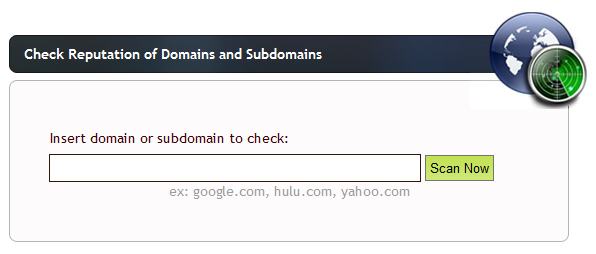
Link scanners are websites and plug-ins that allow you to enter the URL of a suspicious link and check it for safety. There are many free and reliable link scanners available; I suggest you try URLVoid first. URLVoid scans a link using multiple services, such as Google, MyWOT, and Norton SafeWeb, and reports the results to you quickly.

wordpress visitor counter
URLVoid scans several security databases for information on sketchy Web domain names.
URLVoid scans several security databases for 
information on sketchy Web domain names.             More